Appearance
Three sites
The same bundle, the same three attributes and the same script tag, on three landing pages from industries with nothing to do with each other. Each is shown plain, then with the SDK on it.
The moment to watch is the same in every one of them: the visitor says it is too much, hears what actually happens next, and carries on. All three conversations end with the form completed and the lead in the inbox.
Quarterlight — a B2B demo request
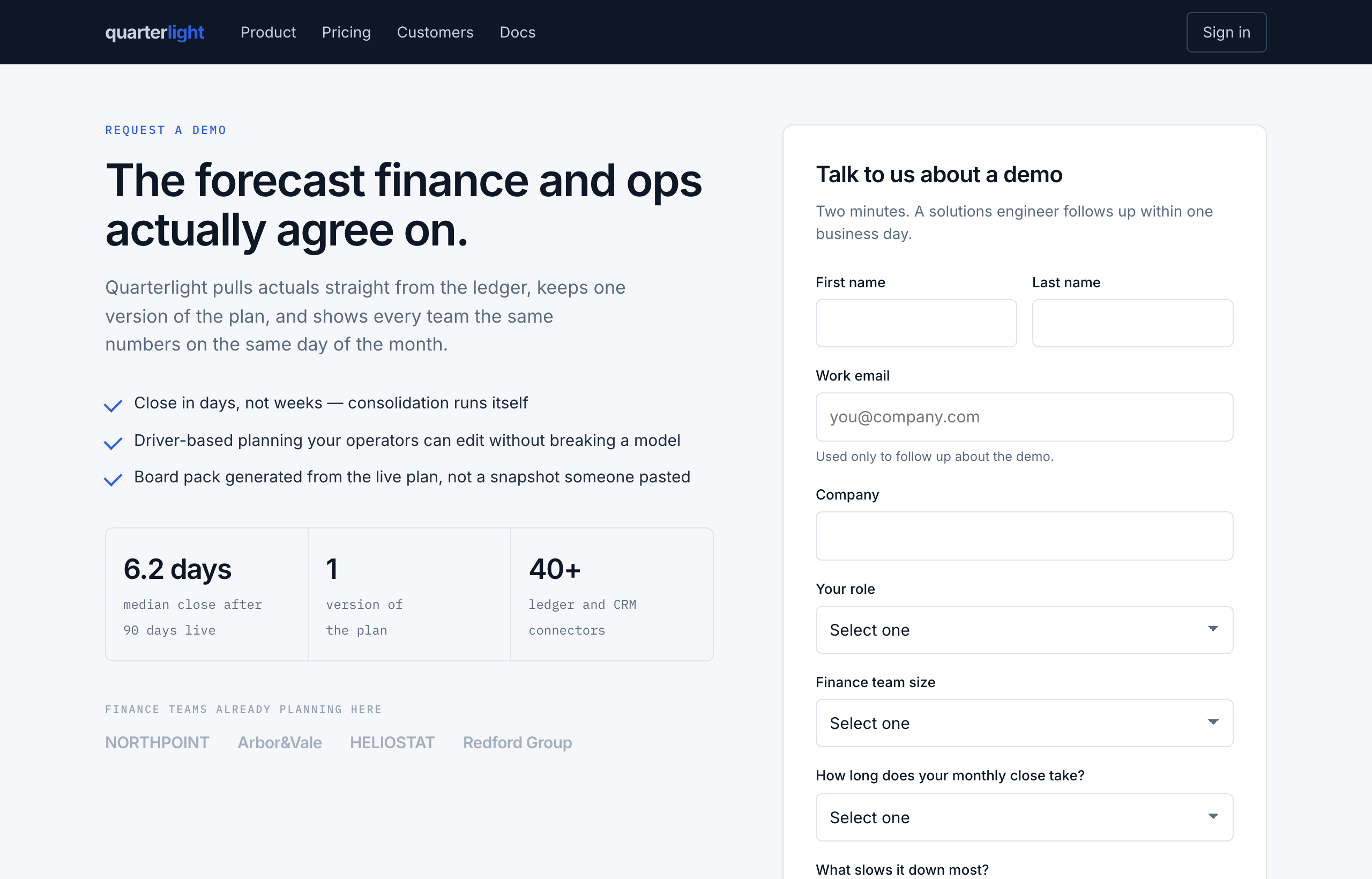
A software company's "talk to us about a demo" form. Text-forward: the agent asks with lists rather than tiles, and there are no pictures anywhere on the page.
The moment: four questions in, they asked for something lighter — the usual way out of a demo form. "Twelve minutes, no call, and nobody chases you afterwards." They asked to see both options, chose the guided pilot, and pressed Request demo.
It will also take a timeline at face value: answer just researching and no sponsored card is placed at all. That restraint is what makes the recommendation worth anything to the visitor who is ready.
Kestrel Home Solar — a free estimate
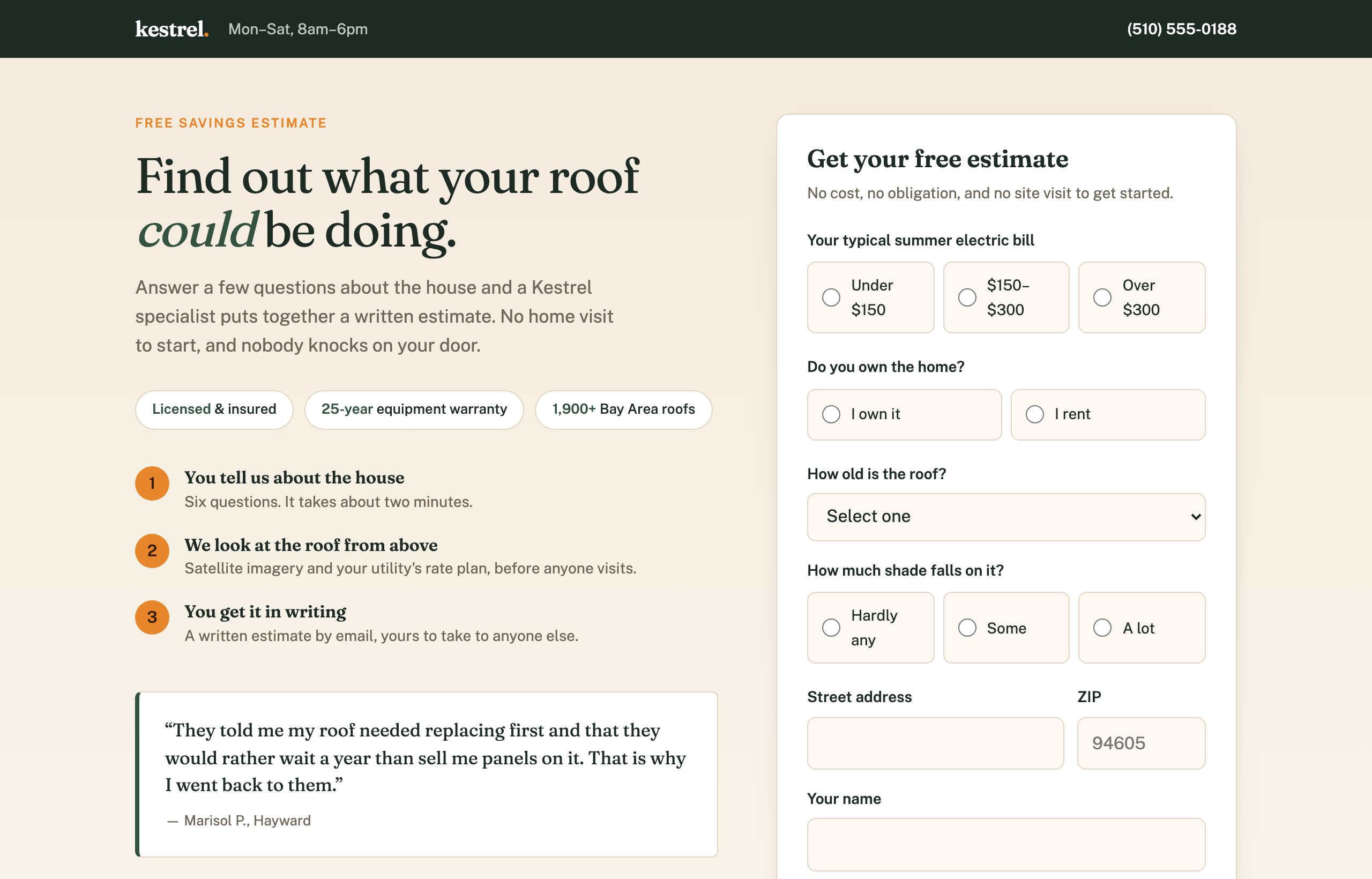
The lead-generation form everyone has abandoned at least once: bill size, roof, ownership, phone. The agent asks about the bill on a scale, and illustrates the payment options as cards.
The moment: at the offer, they said just email it to me — which is where a form like this loses people. "No call, no visit, and nobody follows up unless you reply." They came back for both ways, took the solar loan, and pressed Get my free estimate.
It will also tell a renter, plainly, that an estimate is not much use to them. Saying so is why the homeowner believes the rest of it.
Trellis Academy — a program finder
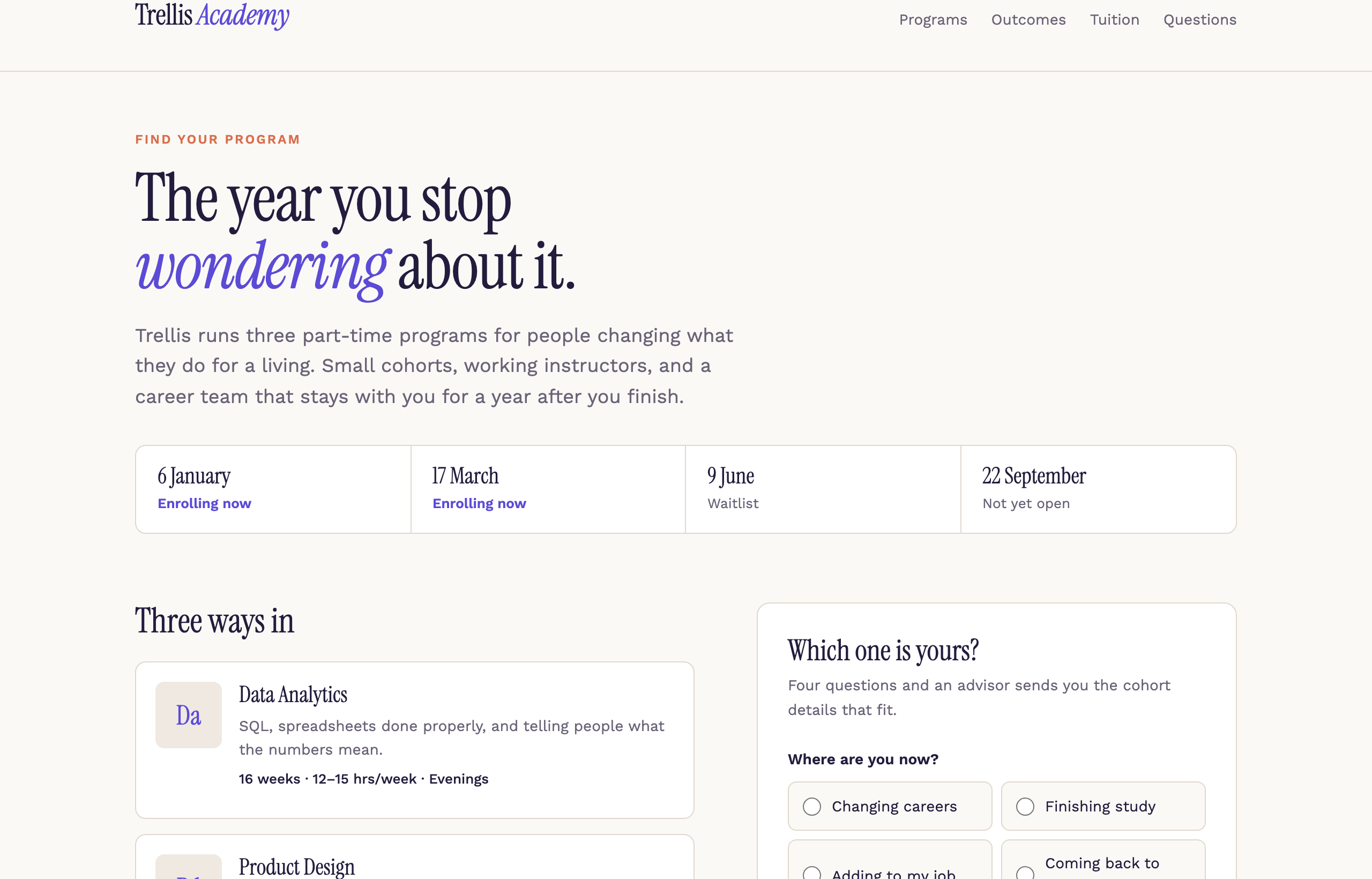
A course catalogue where the visitor does not yet know what they want. The most image-forward of the three: the first question is four tiles, and the programs come back as illustrated cards.
The moment: shown two programs, they asked for something smaller first — the polite no. "Forty-five minutes online, and nobody asks you for anything at the end of it." They asked to see the programs again and pressed Request the details.
It will also match the hours somebody actually has rather than the ones they hoped for, and where they say they would need a scholarship it places no sponsored card at all.
What changes between the states
State 0 is the page as its owner has it today. State 1 adds three attributes and a script tag. State 2 adds the goal, the brand, the panel layout, a theme and the per-field help.
diff
-      <form action="/estimate" method="get" id="EstimateForm" novalidate>
+      <form action="/estimate" method="get" id="EstimateForm" novalidate
+        data-nam-landing-page="kestrel"
+        data-nam-key="lp_live_xxxxxxxx"
+        data-nam-rollout="100">

+<script src="/vendor/landing-page.iife.js"
+        data-intake-url="https://intake.example.core.namakina.com"
+        data-messaging-url="https://messaging.example.core.namakina.com" defer></script>
Four lines added. The one line the diff removes is the form's own opening tag, re-emitted with the attributes under it and its > moved to the end — so the action, every field and the submit button are untouched. See Tagging the form for what state 2 adds.